
Turkey Boating: Your Complete Guide to Sailing the Turkish Coast
When you sail Turkey, you discover one of the world's great maritime environments — a sailor's paradise where ancient history meets crystalline sea. Turkey boating introduces travellers to 8,000 kilometres of deeply indented coastline, more than 1,000 islands, and some of the most protected sailing waters in the Eastern Mediterranean. Whether you're an experienced mariner seeking Turkish sailing culture or a first-time sailor aboard a crewed gulet, this guide covers everything you need to know.
From the legendary Mavi Yolculuk (Blue Voyage) to Bodrum's Aegean bays and the dramatic Lycian coast of Fethiye, Turkey offers a lifetime of sailing exploration within a single country.
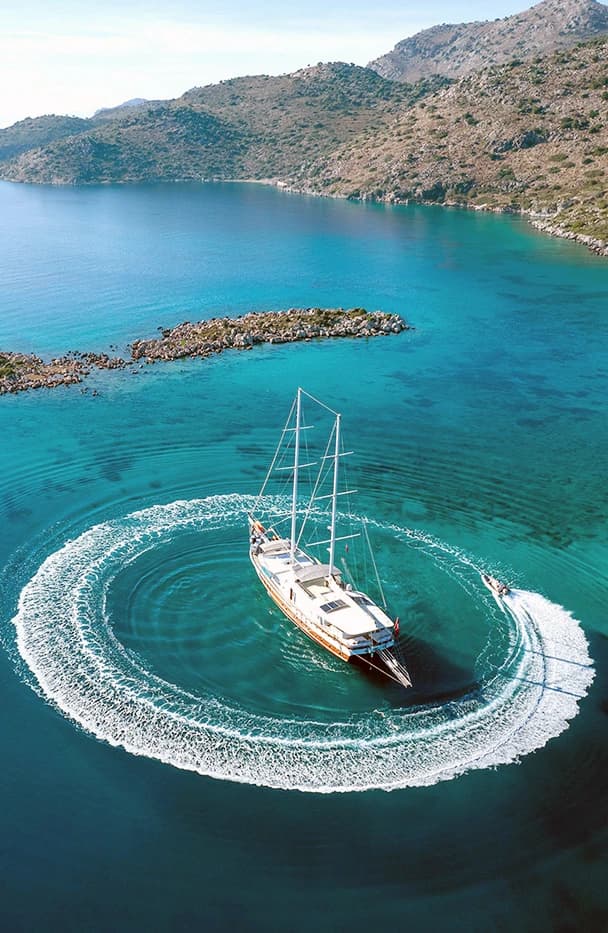
Why Sail Turkey?
Turkish sailing culture has deep roots — the Aegean coast has been home to seafarers since antiquity. Today, that tradition lives on in the form of world-class marinas, a thriving gulet industry, and a sailing community that warmly welcomes international visitors. Here's why Turkey boating stands apart:
Extraordinary Coastline
Over 3,000 kilometres of navigable southwest coastline with 1,000+ islands, hidden bays, sea caves, and thermal springs. More anchorages than most sailors can explore in a lifetime.
Safe, Sheltered Waters
The deeply indented Aegean and Mediterranean gulfs provide natural shelter even in summer breezes. Turkey boating conditions are rated among the most beginner-friendly in the Mediterranean basin.
Nature, History & Gastronomy
Anchor next to sunken Lycian ruins, swim to ancient amphitheatres, dine on freshly caught fish in fishing villages accessible only by sea. Turkish sailing culture fuses all three in every itinerary.
Reliable Mediterranean Climate
A long season from April to October with predictable northerly winds, warm sea temperatures (24–28°C in summer), and over 300 days of sunshine per year make Turkey one of Europe's top sailing destinations.
Best Sailing Routes in Turkey
Turkey's southwest coast divides naturally into two main sailing regions — the Aegean (north) and the Mediterranean (south) — each with distinct character and highlights.
The Blue Voyage — Mavi Yolculuk
The original and most iconic Turkish sailing experience. Coined by the writer Cevat Şakir Kabaağaçlı in the 1940s, the Blue Voyage traditionally runs between Bodrum and Fethiye (or vice versa), taking in the most spectacular bays, peninsulas, and historical sites along Turkey's southwest coast. A week-long gulet cruise following this route remains the definitive Turkey boating experience.
Aegean Routes
Bodrum · Datça · Marmaris
Breezy Aegean sailing with cobalt blue water, cosmopolitan marina towns, and easy access to Greek islands. Best for those who enjoy a mix of lively ports and secluded anchorages.
Mediterranean Routes
Fethiye · Göcek · Antalya
Calmer, warmer waters, dramatic mountain scenery, and the famous Göcek islands. Kekova's sunken Lycian ruins are a highlight. Excellent for families and first-time sailors.
East Mediterranean
Kalkan · Kaş · Kekova
Less visited and wilder than the classic routes. Turquoise waters, ancient Lycian rock tombs, and the submerged city of Kekova make this the most archaeologically rich Turkey boating experience.
Turkish Sailing Season & Best Time to Sail Turkey
Shoulder Season
April – June & September – October
The best time to sail Turkey for most visitors. Warm sea temperatures (20–25°C), fewer crowds, lower prices, and beautiful light. Spring wildflowers along the coast; autumn offers calmer seas and golden hues. Highly recommended.
Peak Season
July – August
Sea temperatures peak at 28°C+, perfect for swimming. The most vibrant atmosphere in marina towns. However, anchorages can be crowded and prices are highest. Book 6+ months ahead for July and August.
Late Season
October – November
October remains excellent for sailing Turkey — warm enough to swim, dramatically quieter anchorages, and the lowest prices of the season. November sees some marinas close and conditions become less predictable.
⚠️ About the Meltemi Winds
The Meltemi (or Etesian) is a seasonal northerly wind that blows across the Aegean from approximately June to September. It typically arrives in the afternoon, reaching Force 5–7 on some days. Experienced Turkish sailing captains navigate around the Meltemi expertly — timing departures for morning, using sheltered routes, and anchoring in protected bays during afternoon gusts. On a crewed gulet, the Meltemi is simply part of the rhythm of Turkish sailing; on a bareboat charter, it requires prior sailing experience.
How to Start Boating in Turkey
Getting on the water in Turkey is straightforward. Here are the main options, from the simplest to the most independent:
Crewed Gulet Charter (Easiest)
No experience required. The captain navigates, the chef cooks, and the crew handles everything. You choose the dates, route, and group — the gulet does the rest. The most popular and all-inclusive form of Turkey boating. See our complete Gulet Charter Turkey guide →
Crewed Sailing Yacht Charter
For those who prefer a sailing yacht over a gulet. A skippered yacht charter gives you the experience of sailing Turkey under canvas, with a professional captain handling navigation. See Boat Charter Turkey →
Motor Yacht Charter
Speed and comfort for those who want to cover more ground. Motor yacht charters in Turkey offer flexible itineraries with the ability to reach remote anchorages quickly. Available from Bodrum, Marmaris, and Göcek.
Bareboat (Self-Skippered) Charter
For licensed sailors who wish to self-navigate. A valid RYA, IYT, or ASA sailing qualification is required. Foreign licences are generally accepted in Turkish waters. Note that bareboat charters are best suited for experienced sailors familiar with the Meltemi.
Frequently Asked Questions
Is sailing Turkey safe for beginners?
Yes — Turkey's Aegean and Mediterranean coastal waters are considered among the safest in the world for beginners. Sheltered gulfs provide natural protection from open-sea swells. On a crewed gulet, no sailing experience is required at all.
What's the difference between Turkey boating and a gulet cruise?
Turkey boating is a broad term covering all maritime activity on Turkish waters — sailing yachts, motor boats, catamarans, and gulets. A gulet cruise specifically refers to chartering a traditional Turkish wooden vessel (gulet) for a crewed Blue Voyage experience — the most comfortable and all-inclusive form of Turkey boating.
Do I need a visa to sail in Turkey?
Most nationalities can obtain a Turkish e-visa online before arrival, valid for up to 90 days. If sailing between Turkey and Greek islands, carry your passport as you'll need to clear customs at each port of entry. Your captain handles all vessel documentation.
Can I sail from Turkey to Greek islands?
Yes — cross-border sailing to Kos, Rhodes, or Chios is popular and feasible. The closest crossings are Bodrum–Kos and Marmaris–Rhodes. Customs clearance is required on both sides; your captain handles all paperwork.
Inquiry Form
Explore More
Gulet Charter Turkey
The complete guide to chartering a gulet in Turkey — routes, prices, types.
Boat Charter Turkey
Sailing yachts, motor yachts and catamarans available for charter in Turkey.
Turkish Yacht
Luxury yachts Turkey — charter & guide.
Luxury Gulet Charter Bodrum
Premium gulets departing from Bodrum — the Aegean's top charter hub.
Ready to Sail Turkey?
Browse our fleet of crewed gulets and sailing yachts, or get in touch for a personalised itinerary recommendation based on your dates and group.
